Beyond Trend Reports: An AI Radar for the Future of Fragrance
Fragrance has always been about timing. Houses look to trend agencies, fashion weeks, food culture, and wellness movements to anticipate what people will want to smell next. But the process is slow. By the time an insight is collected, packaged into a report, and circulated, the market may have already moved on.
We know the pattern well: food trends like matcha or fig crossed into fragrance after years of cultural build up. Then there are the flips. Pistachio went global in fragrance first through Sol de Janeiro, and only afterward spread into desserts, drinks, and even Dubai’s pistachio stuffed chocolate craze that is now inspiring pistachio chocolate cocktails. These reversals show that influence no longer runs in one direction.
Most fragrance houses already work with trend services that scan food, fashion, interiors, and culture. These services provide useful perspectives, but they operate on quarterly or yearly cycles. In today’s world, where a TikTok sound can create a global craze overnight, that cadence is simply too slow. By the time an insight reaches a creative team, consumers may already be on to the next thing.
Where AI Changes the Game in Fragrance Analytics and Scent Product Development
AI can complement human foresight by monitoring cultural signals in real time and layering them together. Instead of looking at each category in isolation, it can see how they interact.
Social chatter such as hashtags, reviews, captions, and visual cues
Search behavior on Google, TikTok, and Pinterest
Food and menus from restaurants, delivery apps, and recipe sites
Beauty and retail signals from new product drops or spikes in sales
This matters because trends rarely live in one domain. Pistachio did not stop at fragrance. It crossed into food and then cocktails. AI in the fragrance industry can pick up these crossovers quickly, showing when something is moving from niche to mainstream, which audience segments are driving it, and how categories begin to influence one another.
AI also adds a global lens. Gourmands spread quickly in the Gulf, while skin scents gained traction first in the United States. AI can map these regional differences and demographic drivers, helping brands know where to test a note, where to scale, and how cultural context shapes adoption. This kind of granularity is almost impossible to achieve with traditional trend services alone.
From Data to Creative Action - Leveraging Fragrance Personalization with AI
The opportunity is not in more dashboards, but in a sharper creative direction. With AI, insights can be transformed into practical guidance: when to source an ingredient earlier, where to test a concept first, and how to adapt a fragrance brief to fit the audience that is most receptive.
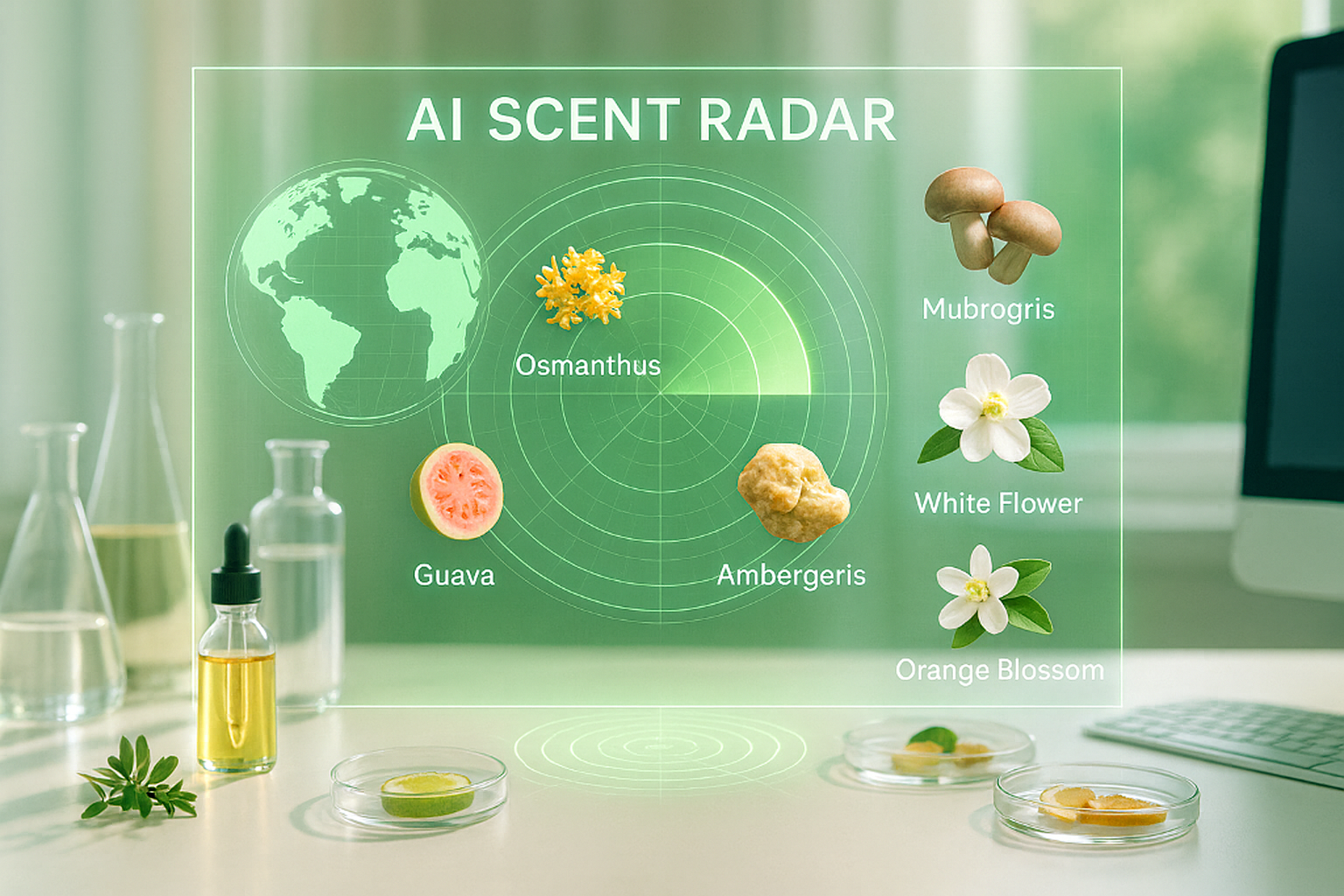
At Future of Smell, we believe fragrance needs a new kind of trend radar. One that does not just describe the present but anticipates the next wave by combining cultural, commercial, demographic, and creative data. We are exploring how AI can scan across domains, connect the dots, and deliver signals that perfumers and brand leaders can act on.
Fragrance has always been guided by imagination. What data offers now is a clearer lens, a way to glimpse the next wave just as it is forming. The next pistachio moment is already out there, waiting for the first brand bold enough to claim it.