Smell and Wellness: How Functional Fragrance Is Going Mainstream
For most of history, fragrance has been about beauty, ritual, and identity. Now it is also being taken seriously as a tool for wellbeing. The idea of functional fragrance created not only to smell good but to help calm, focus, or restore is moving from niche to mainstream.
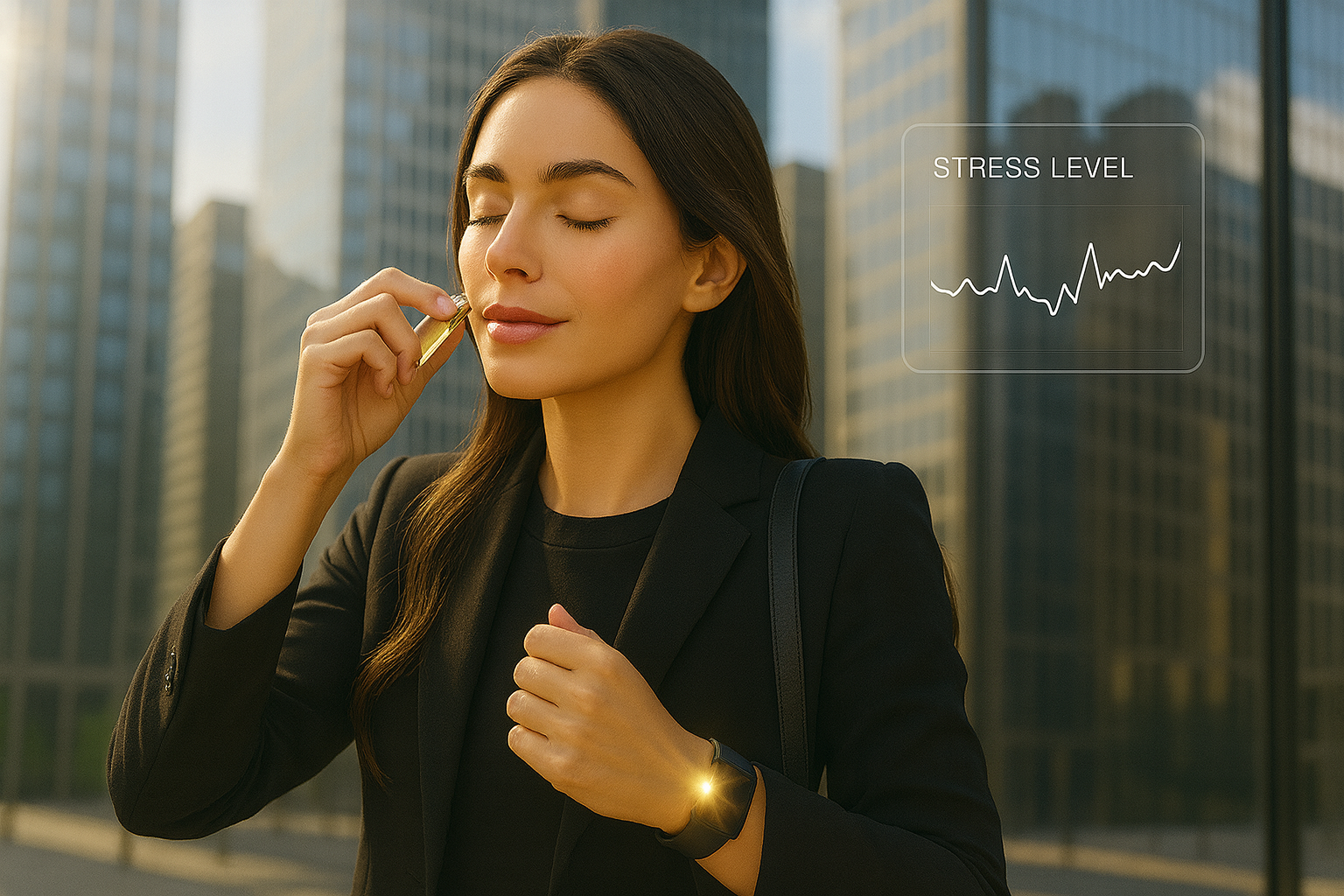
From Scent to Science - The Power of Aromatherapy Scents for Wellness
Most people know lavender is linked with relaxation and citrus with brightness, but the conversation is shifting. When someone sprays a perfume marketed as calming or energizing, there is often more behind it than just a story. Scientists can now measure how our bodies respond to scent in real time, and the results are persuasive.
Functional MRI shows the exact regions of the brain tied to memory and reward that light up with certain aromas. Saliva tests can track cortisol, the body’s primary stress hormone, providing a clear physiological signal of how someone is responding. Heart rate variability and skin conductance give further evidence by showing how stress and arousal shift through the body’s nervous system. And while electroencephalography, or EEG, is sometimes seen as less deep, it is valuable for showing rapid changes in alertness or relaxation within seconds of exposure. The most convincing studies do not rely on a single tool but combine several, creating a layered picture of how a fragrance influences both mind and body.
To help visualize this, researchers often use a circumplex model of emotion, which places arousal on one axis and pleasantness on the other. Fragrance research and marketing almost always sit on the positive side of the circle where calm, pleasure, and joy live. This is where aromatherapy scents play a crucial role in promoting wellness and emotional balance.
Why It Matters Now - Stress Relief Aroma and Its Role in Mental Health
This new focus on functional fragrance comes at a time when mental health is under serious strain worldwide. Stress, anxiety, and burnout are rising across all demographics, but younger generations are experiencing it most acutely.
Surveys show that around three in four Gen Z adults report experiencing stress or anxiety in a typical week, and more than half say they often feel burned out. Rates of diagnosed anxiety and depression in this group are significantly higher than in Millennials, Gen X, or Boomers. Gen Z is also more likely to seek out self care practices and adopt wellness products, blending them into daily routines.
Since Gen Z is one of the largest fragrance consuming groups, their openness to wellbeing solutions directly shapes the market. For them, fragrance is not only about self expression or fashion. It can be part of managing stress, creating a sense of control, and finding small moments of calm in daily life. Givaudan, a global leader in fragrance and flavor, has recognized this shift and made wellness a core pillar of its strategy. Their 2025 strategy, "Committed to Growth, with Purpose," and their newly unveiled 2030 strategy emphasize sustainable growth through wellness driven innovation. In 2025, Givaudan reported CHF 3.864 billion in first half sales with a 6.3 percent like for like growth, driven partly by their focus on wellbeing oriented products such as functional fragrances and clean label ingredients. Their commitment to ESG goals, including 100 percent renewable energy and 85 percent responsible sourcing, aligns with consumer demand for ethical, health focused solutions, positioning Givaudan to lead in the wellness economy.
How the Industry Approaches It: Integrating Aroma Wellness Therapy into Fragrance Research
All major fragrance houses now use neuroscience and biometric testing in their research:
fMRI (brain imaging): Reveals where activity takes place, especially in emotional and reward centers. Expensive, slower, but strong on spatial detail
Salivary cortisol: Tracks stress hormone levels, especially during anxiety or focus tasks
Heart rate variability and skin conductance: Monitor stress and arousal through the body’s autonomic responses
EEG (brainwaves): Captures rapid shifts in attention, arousal, or relaxation. Good for timing but less detailed on where in the brain changes occur
Multi method protocols: The strongest studies combine brain, body, and behavioral data rather than relying on questionnaires alone
There is still debate about which methods provide the most useful evidence. EEG is fast and accessible, but some argue it is not deep enough without support from fMRI or hormonal data. This is why the industry is moving toward multi method protocols, showing more convincingly that fragrance can influence wellbeing.
What Brands Choose to Showcase Calming Scents and Functional Fragrance
The Nue Co. was instrumental in putting functional fragrance on the map. With products like Functional Fragrance and Forest Lungs, they made wellness the center of the story, citing stress research and lab collaborations in their marketing.
Heritage fragrance houses themselves have not launched many functional fragrances under their own names. Instead, their neuroscience and biometric testing capabilities often flow into partnerships with consumer brands. Personal care products found in supermarkets are starting to borrow the language of mood benefits, alluding subtly to claims of relaxation, energy, or focus without spelling out the science. In contrast, some beauty brands speak more directly about mood enhancing properties, signaling to consumers that fragrance can support wellbeing as well as style.
This shows the core challenge: how do you share the science without stripping away the emotion? Too much focus on fMRI scans and cortisol readings risks making fragrance feel clinical. Too little, and claims sound empty. The most effective communication combines the two, grounding stories in credible research while still leaning on the artistry and imagination that fragrance has always carried.
What Comes Next: The Future of Aroma Wellness Therapy and Wellness Products
For executives, this is not only about consumer curiosity. It is about positioning fragrance within the much larger wellness economy. Evidence is becoming a basic requirement. A wellness claim without physiological backing risks credibility, but one supported by solid data can move fragrance into new retail channels alongside supplements, sleep devices, and mindfulness tools.
At the same time, fragrance is beginning to cross boundaries. It no longer sits only on the perfume counter but is increasingly framed as part of daily wellbeing routines. This shift creates opportunities for partnerships, new marketing strategies, and fresh audiences. Perhaps most important, data itself is becoming the differentiator. Owning large datasets of human responses linked to molecular structures gives companies an edge, especially as AI tools are used to identify patterns and predict mood driven fragrances. Whoever builds and controls these datasets will shape the next chapter of the industry.
Fragrance has always been about imagination. What data offers now is a clearer lens, a way to glimpse the next wave just as it is forming. The next functional success may not come from telling a calming story, but from showing that calm is reflected in the brain, the pulse, and the body.
Scent remains art, memory, and emotion. And now it is emerging as a proven instrument of wellbeing, ready to claim its place in the core of the wellness economy.